Advanced Cardiovascular Life Support Classes Houston
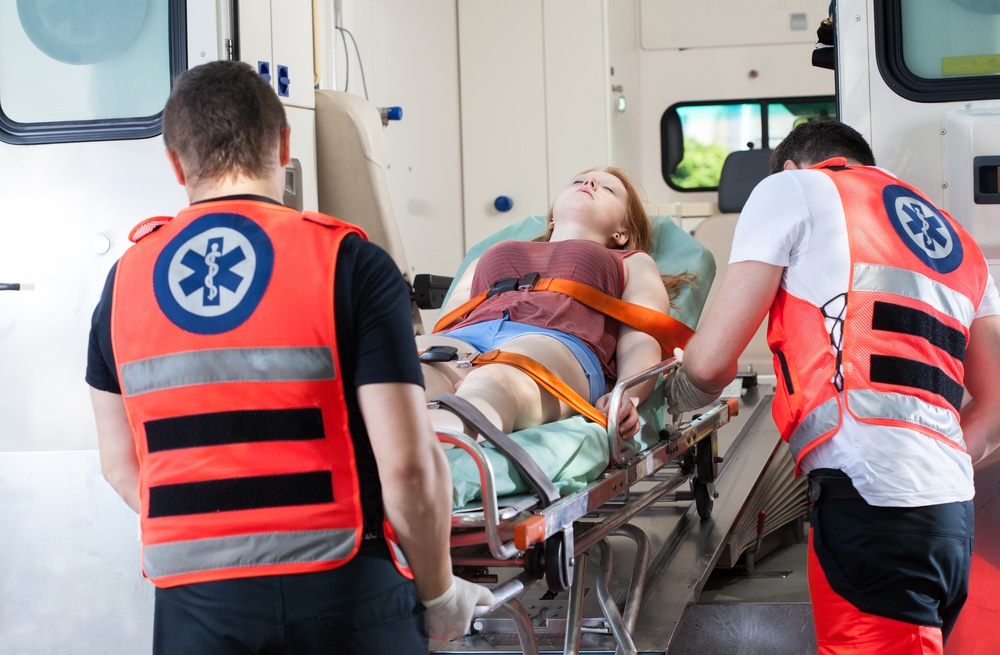
When seconds count, preparation shows. At Health Street in Houston, our Advanced Cardiovascular Life Support (ACLS) program blends practical scenarios, clear algorithms, and confident team communication so you can recognize and treat adult cardiac and respiratory emergencies—on the floor in Memorial City, in the cath lab at the Texas Medical Center, or in an EMS unit rolling through Pasadena or Clear Lake.
With evening/weekend sessions, free parking, and same-day certifications, we make certification fit your life, not the other way around.
We issue the AHA ACLS card (AHA eCard) promptly after successful completion.
Whether you’re enrolling for the first time (Click here for 1st time registration) or searching for ACLS recertification near me (Click here for renewal), you’ll find flexible options, attentive instructors, and a smooth path to documenting that your Houston employer can verify quickly.
How Much Do Your ACLS Classes Cost?
Price: $175 ($165 with Code: SAVE10SEPT )
Class Duration: 10 Hours
Audience: RNs, doctors, respiratory therapists, dentists, paramedics, and any advanced healthcare professional/student.
Topics Covered: Improve outcomes for pediatric patients by preparing healthcare providers to effectively recognize and intervene in patients with respiratory emergencies, shock, and cardiopulmonary arrest by using high‐performance team dynamics and high‐quality individual skills.
Pre-Course Requirements: Once you have registered for this class, you will receive a confirmation email that includes the information and link for the required Pre-Course Self Assessment and Pre-Course Work.
BLS Add On: Once you select a date for the PALS course, you can add BLS on as an option for $45 extra on the following page.
Get your AHA eCard fast. Use code “SAVE10SEPT” before Sept 30 and get 10 dollars off your next course!
What is ACLS?: A clear definition for Houston clinicians
ACLS (Advanced Cardiovascular Life Support) teaches the structured assessment and team-based interventions that stabilize adult patients in cardiac or respiratory crisis.
You’ll practice high-quality CPR, rhythm recognition, airway management, defibrillation, cardioversion decision-making, post–cardiac arrest care, and effective leadership.
If you’ve ever googled “ACLS medical abbreviation”, it refers to this standardized program designed for clinicians who respond to adult codes and deteriorations.
Houston Mini Case Study (Adult STEMI in Midtown ED):
A 58-year-old arrives diaphoretic with crushing substernal chest pain radiating to his left arm. BP is soft, he’s pale, nauseated, and anxious.
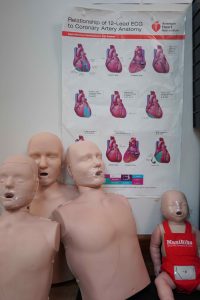
As team leader, you assign roles (compressor, monitor/defibrillator, airway, recorder, meds runner), obtain a 12-lead, and prepare for a potential VF/VT arrest.
Closed-loop communication keeps everyone aligned while you anticipate ACLS algorithm transitions, coordinate with cardiology for possible cath lab activation, and plan post-ROSC care.
This is classic ACLS in action—organized, decisive, and team-first.
Who needs ACLS in Houston & what does ACLS stand for
What does ACLS stand for? Advanced Cardiovascular Life Support.
In Houston’s diverse healthcare ecosystem—ICUs in the Texas Medical Center, procedural suites in Sugar Land, telemetry units in The Woodlands, and EMS agencies across Harris County—ACLS is commonly required for RNs, physicians, advanced practice providers, paramedics, and respiratory therapists who may respond to adult emergencies.
If your role puts you near rapid response, code calls, or post–cardiac arrest care, ACLS is often part of your onboarding or annual competency plan.
Find an ACLS course near me: locations, schedule & logistics
Typing ACLS course near me will surface many choices. Here’s how to choose confidently in the Houston area:
- AHA-aligned program: Ensure your provider issues the AHA ACLS card (AHA eCard) accepted by Houston employers.
- Convenient locations & parking: Our main classrooms are near the Energy Corridor and Memorial City with free parking. We can also come to your facility if you have a minimum of 10 people!
- Evening/weekend options: Rotating shifts shouldn’t block your certification. We run night and Saturday sessions.
- Spanish support: Coordinators and select instructors support Spanish-speaking learners; materials are available when provided by AHA.
- Group training: We’ll come to your unit or practice in Katy, Pasadena, Clear Lake, or Sugar Land—ask about employer partnerships.
How to enroll fast:
- Pick a date on our Class Schedule.
- Choose full classroom or blended (more below).
- Review your student materials and arrive ready to practice.
Need help coordinating multiple staff? See Group Training. Combining courses? Check BLS Certification.
Study smarter: ACLS book, ACLS training book & ACLS handbook
You’ll receive or be directed to official AHA student resources before class. Learners often call them the ACLS book, ACLS training book, or ACLS handbook. Regardless of wording, your goals are consistent:
- Focus on assessment flow (primary/secondary), shockable vs. non-shockable rhythms, and team communication cues.
- Watch the rhythm and megacode videos to see algorithms in motion.
- Skim post–cardiac arrest care and acute coronary syndromes to understand transitions of care.
- Use quick tabs or highlights so you can jump to algorithms during practice.
Pro tip for busy Houston professionals: review in two short sessions (30–45 minutes each) rather than one long cram. You’ll retain more and show up ready to lead.
Blended learning explained: Heartcode ACLS vs ACLS Heartcode
You’ll see both Heartcode ACLS and ACLS Heartcode used online—they refer to the same AHA blended-learning pathway.
With HeartCode, you complete the American Heart Association ACLS online module at your own pace (videos, interactive cases, knowledge checks), then attend an in-person skills session for hands-on practice and assessment.
If your schedule is unpredictable, HeartCode can save time; if you’re new to ACLS or prefer guided discussion, the classroom may be better.
We support both, and our coordinators can help you choose.
High-level ACLS meds overview
This table is educational only (not medical advice, no dosages). Always follow current AHA guidance, local policy, and your clinical judgment.
| Category | Purpose (High-Level) | Common Use in ACLS Algorithms |
| Antiarrhythmics | Help manage refractory VF/VT or stabilize rhythms | Considered in shockable arrest pathways and certain tachyarrhythmias |
| Vasopressors | Support perfusion during cardiac arrest and hypotension | Used in arrest algorithms and post-ROSC hypotension |
| Rate/Rhythm Control | Slow fast rhythms or restore organized conduction | Employed in stable narrow-/wide-complex tachycardias per algorithm |
| Antiplatelets/Anticoagulants* | For ACS/PE pathways per local protocols | Coordinated with cardiology/ED pathways outside arrest core steps |
| Sedation/Airway Adjuncts | Facilitate ventilation and advanced airway care | Considered when managing airway and post-ROSC care |
*Medication classes and timing vary by setting; consult current protocols.
Learners often search ACLS meds before class. In training, you’ll practice when and why a med class fits an algorithm—without memorizing doses.
ACLS recertification near me
If your ACLS is expiring soon, search ACLS recertification near me to find our accelerated renewal sessions. We verify prerequisites, focus on updates since your last course, and prioritize scenario time. For planning purposes:
- How long is ACLS good for? In the U.S., ACLS is typically valid for two years.
- Employers or specialty units may set earlier refreshers—always confirm your facility’s policy and the latest AHA guidance.
- If your card has lapsed, ACLS certification renewal may require a full provider course rather than an update. Our team can help you choose the right track.
We also support HeartCode renewals if you prefer online study with a quick skills session.
Grow your career: ACLS instructor course + team coverage with ACLS/BLS & ACLS/PALS certification
Interested in teaching? Our ACLS instructor course outlines prerequisites (current ACLS, strong clinical background, teaching aptitude), monitoring requirements, and alignment with an AHA Training Center. Instructors are vital across Houston hospital education teams in the Texas Medical Center, EMS academies in Pasadena, and allied-health programs in Katy.
For bedside readiness, many Houston clinicians carry paired credentials: ACLS and BLS for adult codes and high-quality CPR, and in some interdisciplinary units, ACLS and PALS certification to pivot between adult and pediatric populations.
Ask about bundled schedules if you’re adding BLS or PALS to your plan.
FAQs for Houston ACLS Students
Q1. What is ACLS? ACLS is a standardized, team-based program that trains clinicians to manage adult cardiac and respiratory emergencies using algorithms, high-quality CPR, defibrillation/cardioversion, airway support, and post–cardiac arrest care.
Q2. What does ACLS stand for?
Advanced Cardiovascular Life Support.
Q3. How long is ACLS good for? Typically, two years in the U.S. Always confirm renewal timing with your employer and the American Heart Association.
Q4. Is HeartCode accepted by Houston employers? Most accept HeartCode when paired with an in-person skills session. Check your facility’s policy; we can help you verify acceptance before you enroll.
Q5. Can I complete AHA ACLS online only? No, AHA ACLS online covers coursework, but an in-person skills session is required to earn your AHA ACLS eCard.
Q6. What should I bring to class? A photo ID, your student materials (the ACLS book/ACLS handbook), and comfortable shoes for skills practice. If you’re renewing, bring your current/most recent eCard if available.
Q7. How fast will I receive my AHA ACLS card? In most cases, we issue the AHA eCard shortly after you demonstrate skills and complete course requirements; processing times may vary by class volume.
Q8. Where do I park near the Energy Corridor location? We offer free parking. Details and maps are in your confirmation email and our Class Schedule page.
Ready to earn or renew ACLS in Houston?
Call (281) 920-9490 or email info@cprologist.com.
Prefer online coursework?
Choose HeartCode and book your skills check: Book Your ACLS Seat Now!
Evening & weekend options near the Energy Corridor. Free parking. Same-day certification.
Why Choose Us in Houston
- Veteran AHA-aligned instructors with realistic, hands-on scenarios
- Flexible schedules (nights/weekends) across Midtown, Heights, & Memorial City
- Fast AHA eCards, employer partnerships, and onsite group training
Useful links:
- Internal: BLS Certification • Class Schedule • Group Training
Health Street CPRologists • 1710 S. Dairy Ashford Rd., Suite #207, Houston, Texas 77077 • (281) 920-9490
Sign Up Today