STEMI Heart Attack: Symptoms, ECG Signs and ACLS Response
The following is a composite educational scenario, not the story of an identifiable patient.
A patient arrives saying the discomfort is probably indigestion.
She is not clutching her chest. Instead, she looks pale and uncomfortable.
She feels nauseated, unusually tired, and slightly short of breath. Her first electrocardiogram does not provide a clear answer.
It would be easy to feel reassured.
But the clinical team does not stop there. Because her symptoms continue and concern for acute coronary syndrome remains high, they repeat the 12-lead ECG.
The second tracing shows significant ST-segment elevation.
The STEMI pathway is activated, and the patient is prepared for emergency re-perfusion.
That decision matters because heart attack symptoms are not always dramatic, and an initial ECG can be non-diagnostic.
Current guidance calls for rapid ECG evaluation and serial ECGs when clinical suspicion remains high. (professional.heart.org)
TL;DR: What is a STEMI?
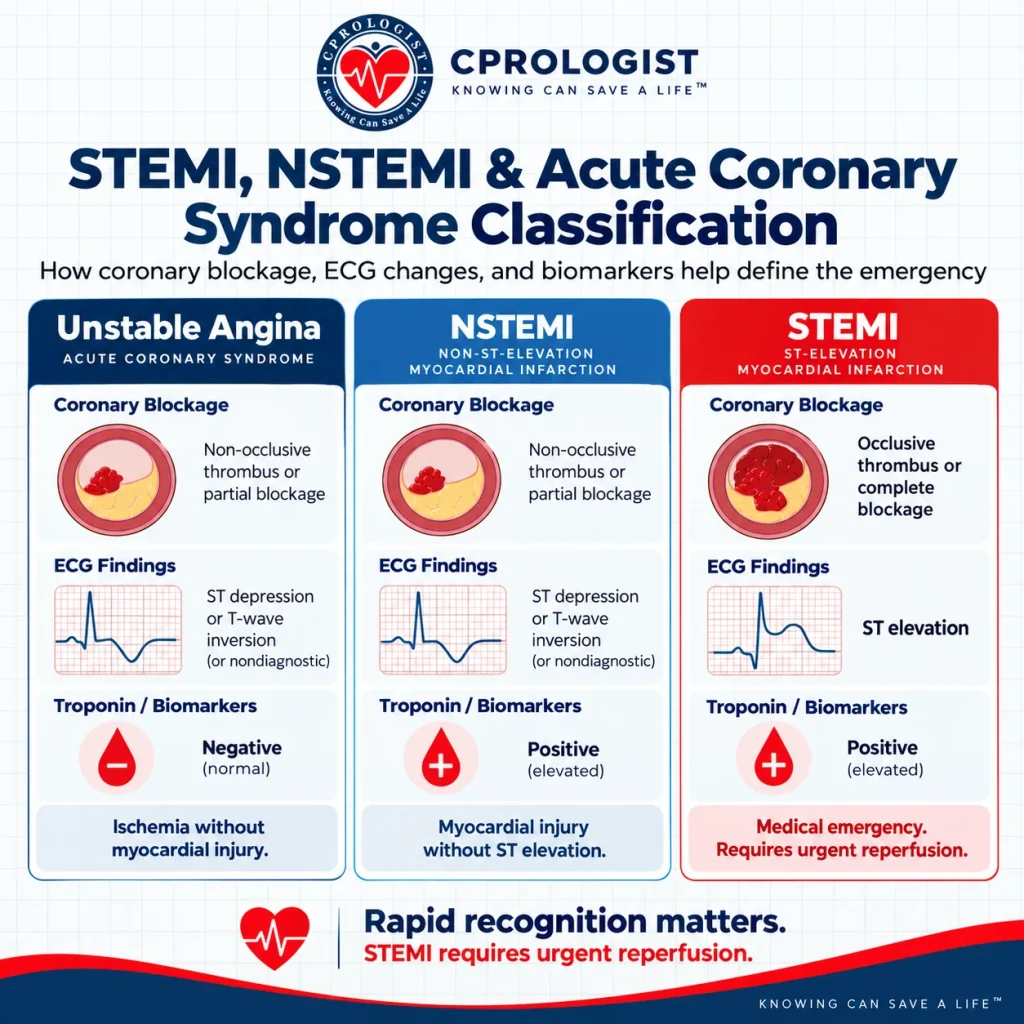
A STEMI, or ST-elevation myocardial infarction, is a serious type of heart attack associated with an ECG pattern called ST-segment elevation. It commonly results from an acute complete or near-complete blockage of a coronary artery, reducing blood flow and oxygen to part of the heart muscle.
Without rapid re-perfusion, the area of myocardial ischemia can progress to permanent heart muscle injury. Emergency treatment usually centers on restoring blood flow as quickly as possible, most often through percutaneous coronary intervention, or PCI. (NCBI)
Possible heart attack symptoms require emergency care. In the United States, call 911 immediately. Do not drive yourself to the hospital or delay the call while waiting to see if symptoms improve.
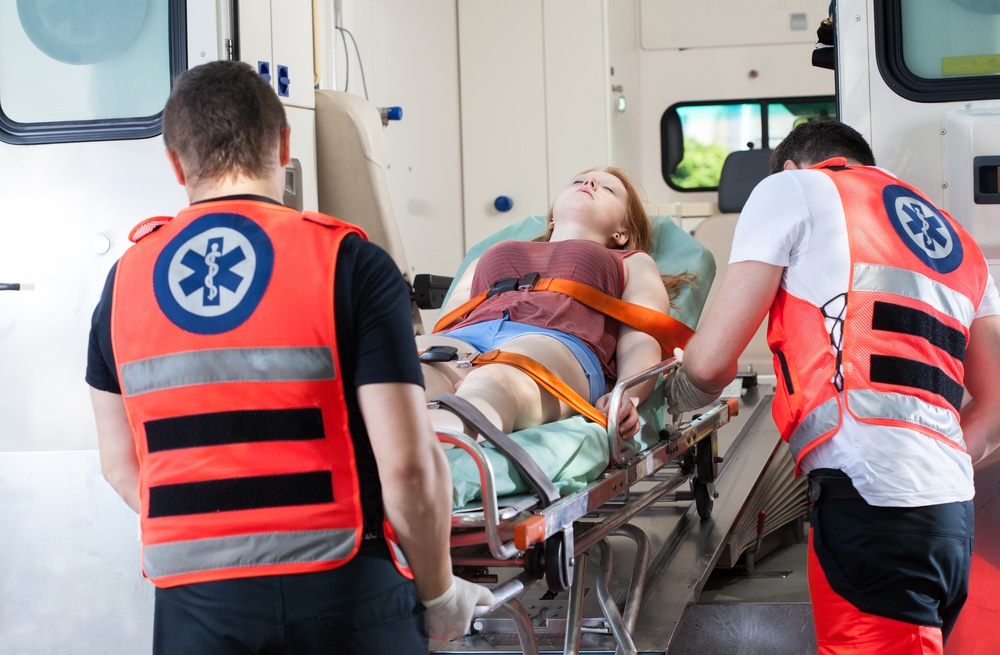
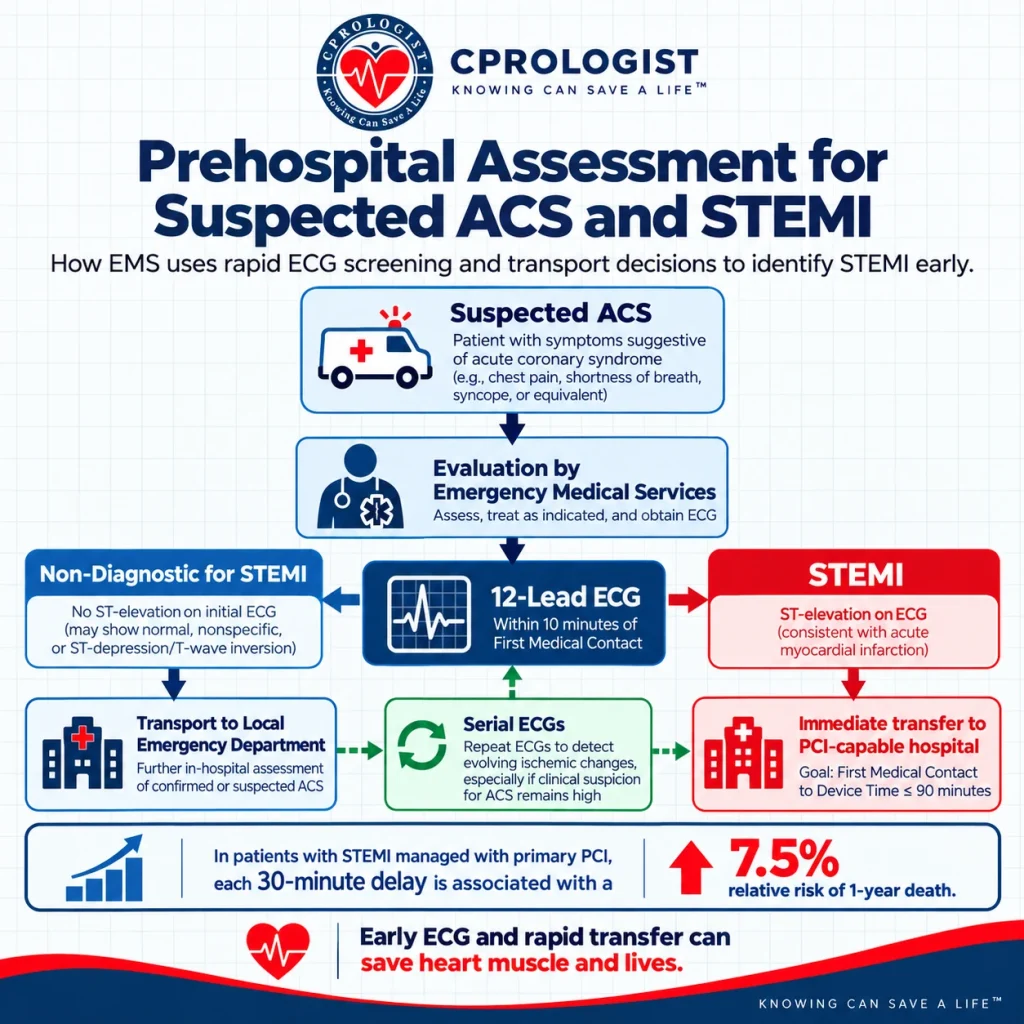
NHLBI notes that heart attack symptoms may begin gradually, may be mild, may come and go, or may occur without classic crushing chest pain. Emergency medical services can begin assessment and treatment while transporting the patient and can notify the hospital before arrival. (NHLBI, NIH)
What does STEMI stand for?
STEMI stands for ST-elevation myocardial infarction.
- How STEMI Is RecognizedST elevation describes a change seen on an ECG or EKG.
- Myocardial refers to the heart muscle.
- Infarction means tissue injury or death caused by inadequate blood flow.
A myocardial infarction occurs when part of the heart muscle does not receive enough blood and oxygen. The longer blood flow remains severely reduced or blocked, the greater the risk of irreversible myocardial damage and serious complications. (CDC)
What happens during a STEMI heart attack?
Many STEMIs begin when an atherosclerotic plaque inside a coronary artery becomes disrupted and a blood clot forms at the site. The clot can abruptly obstruct blood flow through the artery.
This creates myocardial ischemia, meaning the affected heart muscle is not receiving enough oxygenated blood. If circulation is not restored, ischemic tissue can become permanently injured.
STEMI is commonly associated with complete or near-complete occlusion of a major coronary artery. However, the relationship is not absolute. Some patients with acute coronary occlusion do not show classic ST elevation, and an ECG pattern alone does not reveal the artery’s anatomy with certainty. (NCBI)
A quotable definition
A STEMI is an acute myocardial infarction associated with diagnostic ST-segment elevation or a recognized STEMI-equivalent ECG pattern that requires immediate evaluation for re-perfusion.
Why does rapid STEMI recognition matter?
Rapid recognition matters because prolonged loss of coronary blood flow can increase the amount of injured heart muscle.
Complications can include:
- Dangerous ventricular arrhythmias
- Cardiac arrest
- Cardiogenic shock
- Acute heart failure
- Mechanical complications of myocardial infarction
- Long-term reduction in cardiac function
Current American Heart Association systems of care use performance targets that include obtaining a 12-lead ECG within 10 minutes of arrival and reaching PCI within 90 minutes for eligible patients who present directly to a PCI-capable hospital. Transferred patients may have different system targets, including a first-hospital-to-PCI target of 120 minutes. These are system performance goals, not instructions for patients to time their own symptoms before seeking help. (www.heart.org)
What are the symptoms of a STEMI?
A STEMI can cause classic chest discomfort, but patients do not all describe their symptoms the same way.
Common warning symptoms include:
- Pressure, squeezing, heaviness, fullness or pain in the chest
- Pain or discomfort in one or both arms
- Jaw, neck, shoulder, back or upper abdominal discomfort
- Shortness of breath
- Cold sweating
- Nausea or vomiting
- Light-headedness, weakness or fainting
- Unusual or unexplained fatigue
- A rapid or irregular heartbeat
- A feeling that something is seriously wrong
Symptoms may be sudden and severe, but they can also begin slowly, remain relatively mild or come and go over several hours. (CDC)
Can a STEMI happen without crushing chest pain?
Yes. A patient can have a STEMI or another myocardial infarction without textbook crushing chest pain.
Older adults, people with diabetes and women may be more likely to experience less typical or less recognized presentations. Women still commonly experience chest pain, but may also report shortness of breath, back or arm discomfort, unusual fatigue, weakness, nausea or an upset stomach, with or without chest pain. (NHLBI, NIH)
Clinical risk: describing heart attacks as a uniform “man clutching his chest” event can create false reassurance. Symptoms, risk factors, vital signs, examination findings, ECG changes and cardiac biomarkers must be considered together.
What does ST elevation mean on an ECG?
The ST segment is the portion of the ECG between ventricular depolarization and repolarization. In simplified terms, it appears after the QRS complex and before the T wave.
When injured or severely ischemic heart muscle changes the heart’s electrical pattern, the ST segment may rise above the ECG baseline in related leads. Those related leads are called contiguous leads because they view neighboring areas of the heart.
Traditional STEMI criteria generally involve new ST elevation at the J point in at least two contiguous leads, using thresholds that vary by lead, age and sex. Interpretation must also account for symptoms, previous ECGs and conditions that can mimic acute infarction. (NCBI)
Does any ST elevation automatically mean STEMI?
No. ST elevation is an important finding, but it does not automatically prove that a patient is having a STEMI.
Possible mimics include:
- Early repolarization
- Pericarditis or myocarditis
- Left bundle branch block
- Ventricular aneurysm from a previous infarction
- Brugada pattern
- Stress cardiomyopathy
- Electrolyte or metabolic abnormalities
- Pulmonary embolism in certain presentations
- Other structural or neurologic emergencies
At the same time, the opposite risk also exists: an acute coronary occlusion may be present without meeting classic STEMI thresholds. This is why clinicians should not use a single automated ECG statement or one isolated feature as the entire diagnosis. (PubMed)
Can the first ECG miss a STEMI?
Yes. An initial ECG can be non-diagnostic, especially early in the event or when the affected territory produces subtle or atypical changes.
The 2025 ACC/AHA acute coronary syndrome clinical materials recommend:
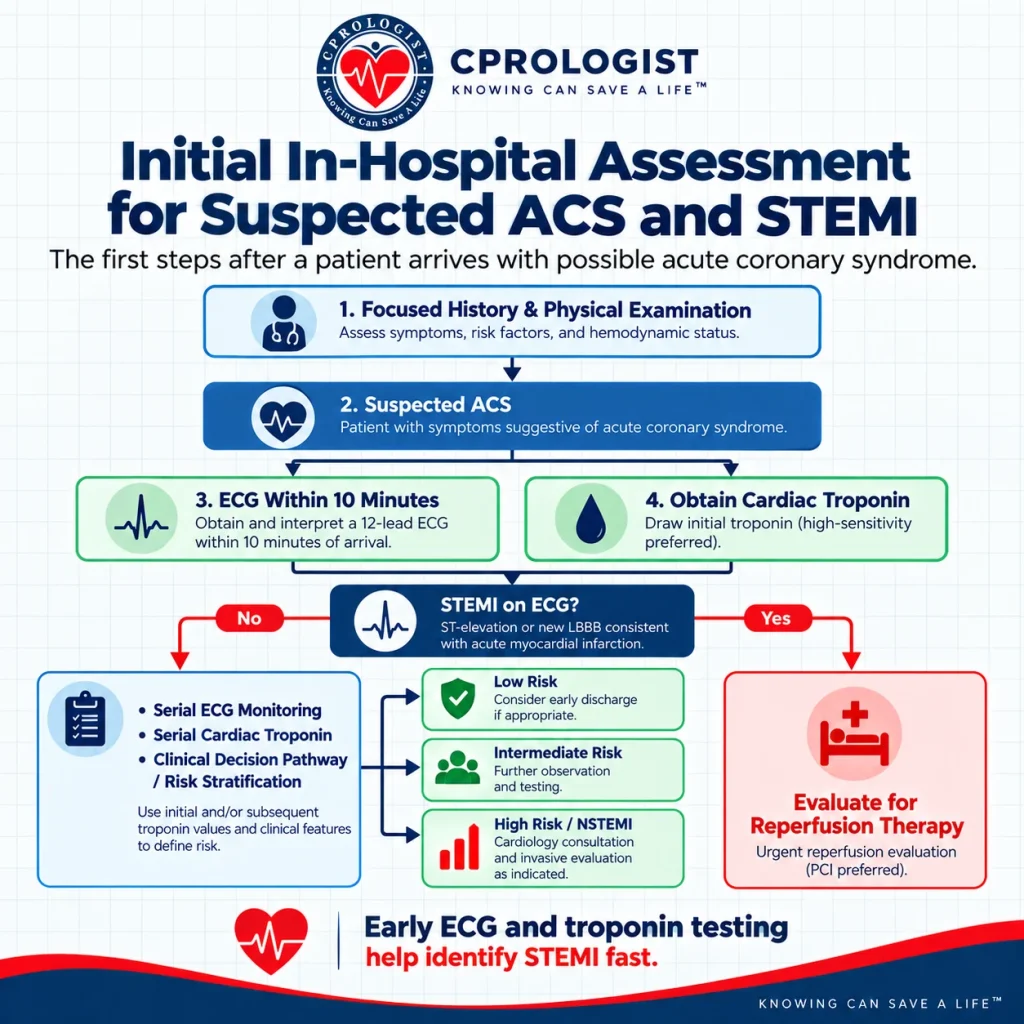
- Obtaining an ECG within 10 minutes for suspected acute coronary syndrome.
- Using serial ECGs when the initial ECG is non-diagnostic and clinical suspicion remains high.
- Obtaining and trending cardiac troponin.
- Integrating the ECG with the patient’s history, examination, hemodynamic condition and overall risk. (professional.heart.org)
A non-diagnostic first tracing should not be treated as a universal “all clear” when symptoms persist or the clinical picture remains concerning.
What is the difference between STEMI and NSTEMI?
Both STEMI and NSTEMI are myocardial infarctions. Both require urgent medical evaluation.
| Clinical feature | STEMI | NSTEMI |
| Full name | ST-elevation myocardial infarction | Non-ST-elevation myocardial infarction |
| ECG pattern | Diagnostic ST elevation or a recognized equivalent is present | Persistent diagnostic ST elevation is absent |
| Cardiac biomarkers | Cardiac troponin typically rises | Cardiac troponin rises |
| Coronary anatomy | Often associated with acute complete or near-complete occlusion | Anatomy varies and may include severe narrowing or acute occlusion |
| Immediate pathway | Emergency evaluation for rapid re-perfusion | Urgent risk assessment and guideline-directed invasive management |
| Clinical seriousness | Life-threatening emergency | Also a potentially life-threatening emergency |
A common public explanation says STEMI means a complete blockage and NSTEMI means a partial blockage. That explanation is easy to understand, but it is medically incomplete. Contemporary evidence shows that some NSTEMI-classified patients have an acutely occluded coronary artery, which is one reason clinicians must consider more than the traditional STEMI versus NSTEMI label. (PubMed)
How is a STEMI diagnosed?
STEMI evaluation is time-sensitive and typically includes:
1. Focused history
The team assesses symptom onset, duration, quality, location, radiation, associated symptoms, prior cardiac history, medications and major contraindications to possible treatment.
2. Immediate clinical assessment
This includes airway, breathing, circulation, vital signs, oxygen saturation, mental status, signs of shock, heart failure or respiratory distress, and ongoing monitoring.
3. A 12-lead ECG
The ECG looks for ST elevation, reciprocal changes, evolving ischemia, arrhythmias and other high-risk or STEMI-equivalent patterns.
4. Serial ECGs
Repeat tracings may identify dynamic changes that were absent or unclear on the first ECG.
5. Cardiac troponin
High-sensitivity cardiac troponin helps identify myocardial injury. However, treatment of an ECG-diagnosed STEMI should not be unnecessarily delayed while waiting for a biomarker result.
6. Coronary angiography
Angiography allows clinicians to view the coronary arteries, locate an obstructing lesion and, when appropriate, proceed directly to PCI. (professional.heart.org)
What should someone do when a heart attack is suspected?
For a member of the public:
- Call 911 immediately.
- Do not drive yourself to the hospital.
- Rest and follow the dispatcher’s instructions.
- Do not wait for symptoms to become severe.
- Do not delay the emergency call to take aspirin.
The American Heart Association advises calling 911 before doing anything else. A dispatcher or healthcare professional may recommend aspirin after checking factors such as allergy and bleeding risk. Aspirin is not appropriate for everyone and should not be used as a reason to postpone emergency evaluation. (www.heart.org)
If the person becomes unresponsive and is not breathing normally, this may indicate cardiac arrest. Begin CPR, use an AED when available and follow dispatcher instructions.
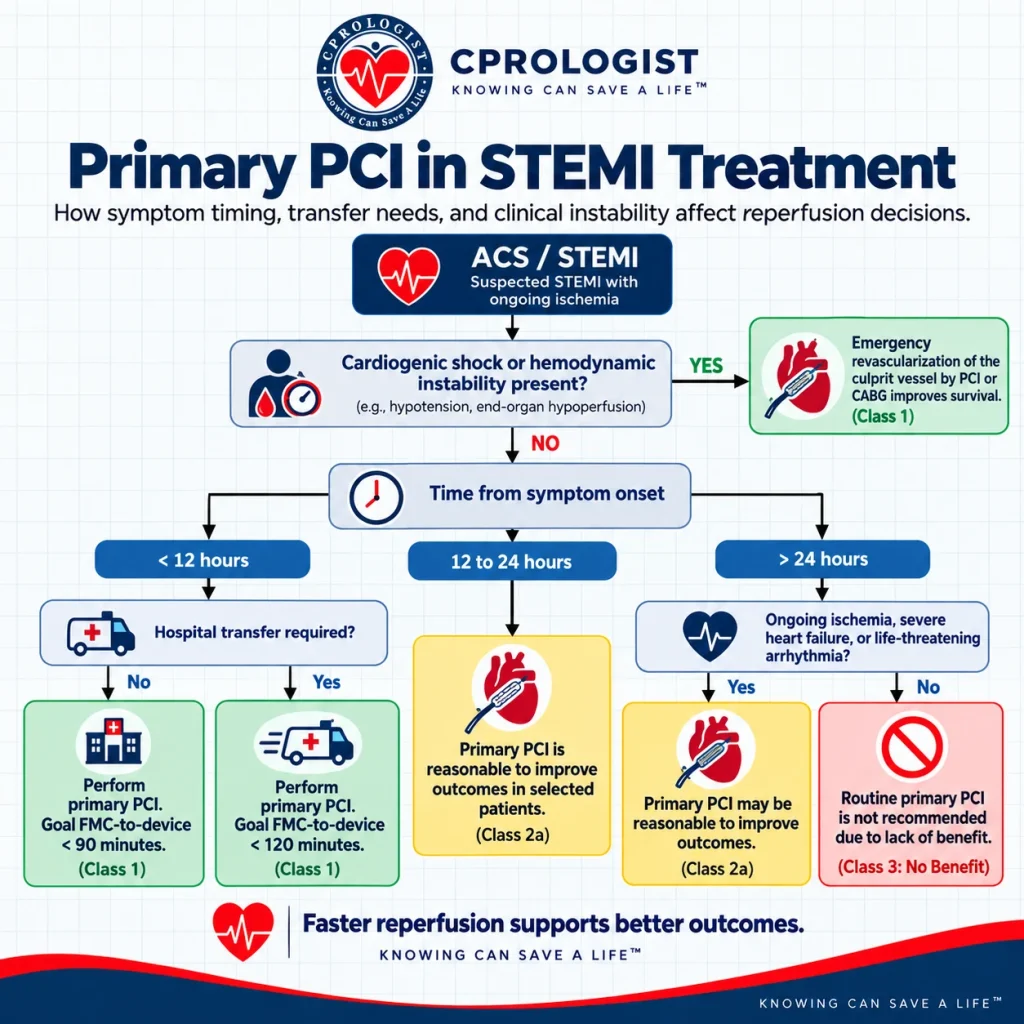
What is Reperfusion?
Reperfusion means restoring blood flow to ischemic heart muscle.
For many patients with STEMI, the preferred re-perfusion strategy is primary percutaneous coronary intervention, commonly called PCI or coronary angioplasty.
During PCI, a catheter is used to reach the affected coronary artery. A balloon may be inflated and a stent may be placed to reopen the vessel.
When timely primary PCI cannot be achieved, fibrinolytic medication may be appropriate for selected patients who meet time and eligibility criteria and have no major contraindications.
Patients receiving fibrinolysis are generally transferred to a PCI-capable center for further evaluation and possible intervention. (professional.heart.org)
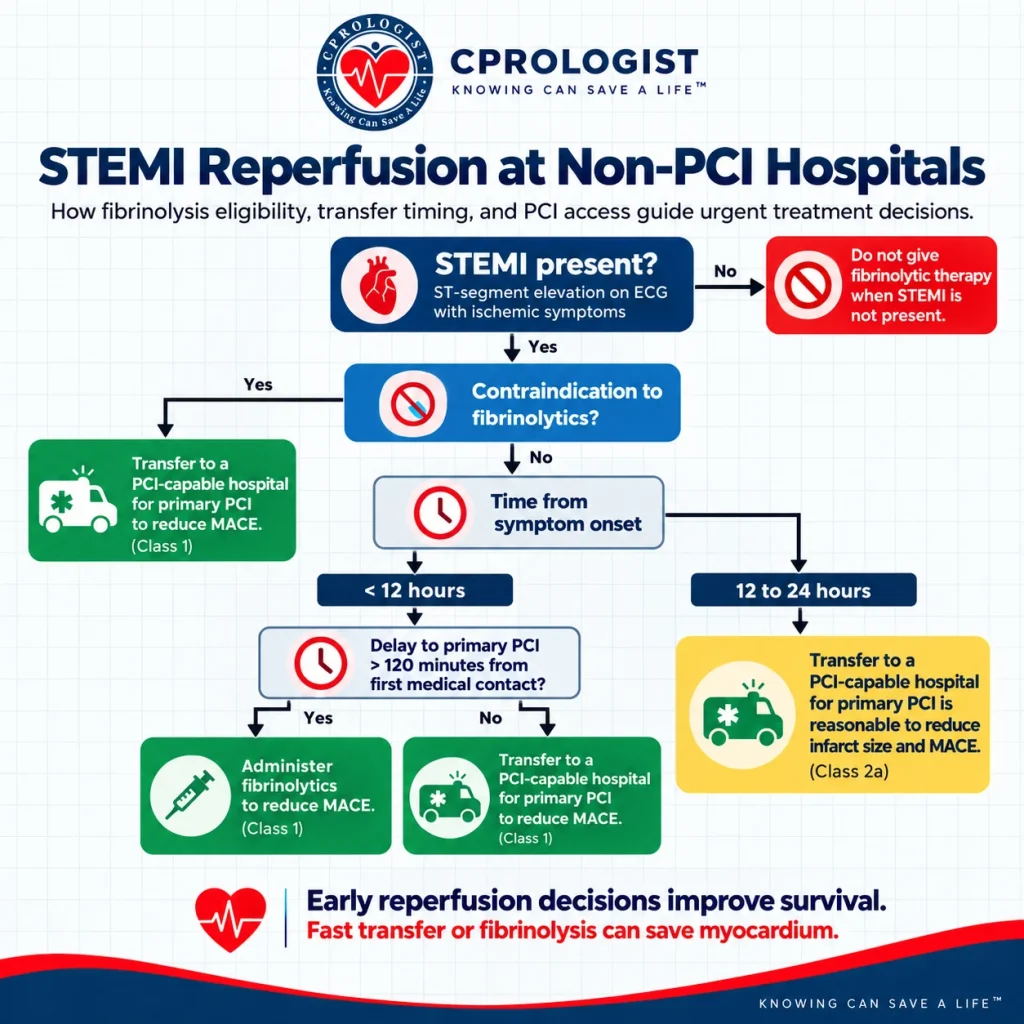
Treatment choice depends on clinical findings, symptom timing, transport time, bleeding risk, contraindications and the resources available within the regional STEMI system.
How does ACLS training support STEMI response?
The American Heart Association’s 2025 ACLS course teaches healthcare professionals to recognize and respond to cardiac arrest, stroke, acute coronary syndromes and other cardiopulmonary emergencies using structured assessment and high-performance teamwork.
Current ACLS content includes:
- Systematic patient assessment
- High-quality basic life support
- Airway management
- Rhythm recognition
- Defibrillation
- Cardioversion
- Transcutaneous pacing
- Medication principles
- High-performance team communication
- Early recognition and management of acute coronary syndromes
The curriculum reflects 2025 AHA CPR and Emergency Cardiovascular Care science and the 2025 acute coronary syndrome guideline. (cpr.heart.org)
What ACLS contributes during a suspected STEMI
ACLS can help clinicians and response teams practice how to:
- Use a consistent primary and secondary assessment
- Recognize signs of clinical deterioration
- Identify dangerous bradyarrhythmias and tachyarrhythmias
- Prepare for cardiac arrest or cardiogenic shock
- Communicate through clear roles and closed-loop communication
- Escalate care within a coordinated emergency system
- Avoid losing critical information during a high-pressure response
What ACLS does not replace
ACLS does not replace:
- Advanced 12-lead ECG education
- A hospital’s STEMI or acute coronary syndrome protocol
- Cardiologist or emergency physician consultation
- Scope-of-practice requirements
- Local medication and transfer protocols
- Clinical judgment
- Ongoing competency development
The strongest positioning for Health Street is not that ACLS makes someone a cardiologist. It is that ACLS helps healthcare professionals organize their assessment, recognize deterioration, respond to life-threatening rhythms and operate effectively inside a time-sensitive cardiac emergency team.
What changed in the 2026 definition of myocardial infarction?
The Fifth Universal Definition of Myocardial Infarction, released on August 28, 2026, introduced a simplified clinical classification based on underlying cause:
- Primary myocardial infarction: A spontaneous event caused by primary acute coronary pathology
- Secondary myocardial infarction: Injury caused by an imbalance between myocardial oxygen supply and demand from another acute condition
- Procedure-related myocardial infarction: An event related to a cardiac procedure
It also emphasizes sex-specific 99th-percentile reference limits for cardiac troponin and updated high-sensitivity troponin interpretation. (professional.heart.org)
This does not mean the terms STEMI and NSTEMI disappeared from emergency care. The 2025 acute coronary syndrome guideline still uses STEMI and NSTE-ACS pathways to guide immediate recognition and management. The practical interpretation is that clinicians must understand both the patient’s urgent ECG presentation and the underlying mechanism of myocardial injury. (professional.heart.org)
Frequently asked questions about STEMI
Is a STEMI the most dangerous kind of heart attack?
A STEMI is a medical emergency with a high risk of rapid myocardial injury, arrhythmia, shock and cardiac arrest. However, NSTEMI and other acute coronary syndromes can also be life-threatening. The safest approach is to treat all possible heart attack symptoms as requiring urgent evaluation.
Is STEMI the same thing as cardiac arrest?
No.
A heart attack is primarily a circulation problem caused by reduced or blocked blood flow to heart muscle. Cardiac arrest is an electrical or mechanical failure in which the heart stops pumping blood effectively.
A STEMI can trigger a lethal arrhythmia and lead to cardiac arrest, but the two conditions are not identical. (professional.heart.org)
Can someone be awake during a STEMI?
Yes. Many patients remain conscious and able to speak during a STEMI. Consciousness does not make the condition less urgent.
Can a STEMI feel like indigestion?
Yes. Upper abdominal discomfort, nausea, pressure or symptoms described as indigestion can occur during a heart attack. New, unexplained or concerning discomfort should not be dismissed based only on how the patient describes it. (NHLBI, NIH)
Does a normal first ECG rule out a heart attack?
No. The initial ECG may be non-diagnostic, and NSTEMI does not require ST elevation. Serial ECGs, serial cardiac troponin and continued clinical evaluation may be necessary. (professional.heart.org)
What is the main treatment for STEMI?
The central goal is rapid re-perfusion. Primary PCI is generally preferred when it can be performed within an appropriate system timeframe. Fibrinolysis may be used in selected eligible patients when timely PCI is unavailable. (professional.heart.org)
Does an ACLS course qualify someone to diagnose STEMI independently?
No. ACLS supports systematic assessment, acute coronary syndrome recognition, rhythm management and coordinated emergency response. Independent diagnostic and treatment authority depends on professional licensure, clinical training, scope of practice and local protocols.
Key takeaways
- STEMI means ST-elevation myocardial infarction.
- It commonly reflects an acute complete or near-complete coronary artery occlusion.
- Not every patient has crushing chest pain.
- Not every ST elevation is a STEMI.
- Not every acute coronary occlusion produces classic ST elevation.
- A 12-lead ECG should be obtained rapidly, with serial ECGs when suspicion remains high.
- Re-perfusion, usually through PCI, is central to STEMI treatment.
- ACLS helps healthcare professionals practice systematic assessment, rhythm recognition and coordinated team response.
- Suspected heart attack symptoms require immediate emergency activation.
Prepare before the next cardiac emergency arrives
The next patient may not say, “I am having a heart attack.”
They may say they have indigestion, jaw pressure, unexplained fatigue, nausea or a feeling that something is not right. Your preparation influences what happens next.
CPROLOGIST offers American Heart Association ACLS initial and renewal classes for healthcare professionals and students in Houston. The purpose is greater than completing a certification requirement. It is an opportunity to practice structured assessment, rhythm recognition, emergency communication and high-performance team response before those skills are needed in a real cardiac emergency. (Health Street CPR)
Explore CPROLOGIST American Heart Association classes
View current CPROLOGIST course dates
Recognize the emergency. Activate the right response. Be prepared to help your team protect a life when every minute matters.
Join An ACLS Class HereHealth Street CPRologist
1710 S. Dairy Ashford Rd., Suite #207
Houston, TX 77077
Phone: (281) 920-9490
Text: (281) 713-4555
Email: info@cprologist.com

Leah F. is the Operations Director at Health Street CPRologist in Houston, Texas. She supports AHA course operations, student registration, instructor coordination, certification workflows, and class scheduling for CPR, BLS, ACLS, PALS, NRP, Heartsaver, First Aid, AED, and Spanish-language training programs. Her content helps students, healthcare professionals, employers, and community members choose the right certification class with clear, practical guidance.
Medical disclaimer
This article is provided for professional and public education. It does not replace individualized medical advice, formal ECG training, clinical judgment, professional scope-of-practice requirements or local emergency protocols.
Anyone experiencing possible heart attack symptoms in the United States should call 911 immediately!