What Should Be in a Home First Aid Kit?
Direct answer: A home first aid kit should contain adhesive bandages, sterile gauze, medical tape, antiseptic supplies, nonlatex gloves, a cold compress, a thermometer, tweezers, an emergency blanket, a CPR breathing barrier, and other basic first aid supplies.
You should also personalize your first aid kit with medications, medical information, and supplies appropriate for your household.
Check the kit regularly. Replace anything that has been used, damaged, opened, or expired.
TL;DR: Your 2026 Home First Aid Kit
A useful home first aid kit helps you respond to common injuries while keeping basic emergency supplies organized and accessible.
For a household of four, start with the 20 essentials below.
Then personalize the kit for the ages, medical conditions, allergies, medications, activities, and other needs of the people in your household.
- Stock the basics: Bandages, gauze, tape, gloves, antiseptic supplies, cold packs, and basic first aid tools.
- Personalize it: Add medications and medical supplies appropriate for your household.
- Check it regularly: Replace expired, damaged, opened, or used items.
- Keep it accessible: Responsible adults should know where the kit is stored.
- Consider a second kit: Keep basic first aid supplies in your vehicle for emergencies away from home.
- Know the limits: A first aid kit does not replace 911, EMS, professional medical care, CPR, AED use, or hands-on training.
20 First Aid Kit Essentials for 2026
- Adhesive bandages
- Sterile gauze pads
- Gauze roll
- Medical adhesive tape
- Absorbent compress dressings
- Antiseptic wipes
- Antibiotic ointment
- Nonlatex gloves
- Instant cold compress
- Oral thermometer
- Tweezers
- Triangular bandages
- Emergency blanket
- CPR breathing barrier
- Hydrocortisone ointment
- Scissors
- Emergency first aid instructions
- Emergency contact information
- Personal medications and medical supplies
- Additional supplies recommended by your healthcare professional
Home First Aid Kit Quick Answers
| Question | Quick Answer |
|---|---|
| What should be in a home first aid kit? | Bandages, gauze, tape, antiseptic supplies, gloves, a cold pack, thermometer, tweezers, emergency supplies, and household-specific medical items. |
| How often should you check a first aid kit? | Check it regularly and after every use. |
| Should you keep a first aid kit in your car? | Yes. A vehicle kit provides access to basic first aid supplies when you are away from home. |
| Where should a first aid kit be stored? | Keep it somewhere responsible adults can access quickly while protecting medications and hazardous supplies from young children. |
| Is owning a first aid kit enough? | No. Supplies do not replace first aid, CPR, and AED training or professional emergency medical care. |
What Should Be in a Home First Aid Kit in 2026?
A well-stocked home first aid kit should contain basic supplies for common injuries, protective equipment, emergency information, and household-specific medical supplies.
There is no single first aid kit that is perfect for every household.
The right supplies depend on the number and ages of people in your home.
They can also depend on known medical needs, allergies, activities, travel, location, and recommendations from your healthcare professional.
Do not wait for an injury before checking what is inside your first aid kit.
It is also important to know how to use the supplies correctly.
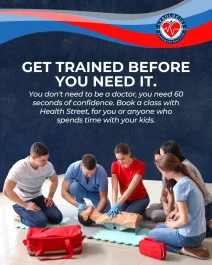
Health Street CPRologist offers First Aid, CPR, and AED classes in Houston
for parents, caregivers, employees, teachers, coaches, and other community members.
What Are the 20 Essential First Aid Kit Items?
1. Adhesive Bandages
Keep adhesive bandages in several sizes.
They can be useful for protecting minor cuts and scrapes.
2. Sterile Gauze Pads
Sterile gauze provides more coverage than a standard adhesive bandage.
Keep multiple sizes available for different needs.
3. Gauze Rolls
Gauze rolls can help hold appropriate dressings in place.
4. Medical Adhesive Tape
Medical tape can be used to secure appropriate gauze and dressings.
5. Absorbent Compress Dressings
Larger absorbent dressings provide additional coverage for wounds that require more than a small bandage.
6. Antiseptic Wipes
Antiseptic wipes can be included for appropriate cleaning applications.
Follow the product instructions for proper use.
7. Antibiotic Ointment
Antibiotic ointment may be included when appropriate for your household.
Follow product directions and consider individual allergies or medical guidance.
8. Nonlatex Gloves
Disposable nonlatex gloves provide an important protective barrier when assisting someone with an injury.
9. Instant Cold Compress
An instant cold compress can be useful for certain bumps, sprains, and minor injuries.
10. Oral Thermometer
Keep a reliable thermometer available for checking body temperature.
Choose a non-mercury, non-glass thermometer.
11. Tweezers
Tweezers can be useful for tasks such as removing accessible splinters.
12. Triangular Bandages
Triangular bandages are a versatile component of a more complete first aid kit.
13. Emergency Blanket
Compact emergency blankets take up very little space and can be included as part of emergency preparedness supplies.
14. CPR Breathing Barrier
A CPR breathing barrier with a one-way valve can be included with your emergency response supplies.
A barrier is most useful when the person responding also understands how and when to perform CPR.
Learn more about CPR and AED training for families and laypersons.
15. Hydrocortisone Ointment
Appropriate topical products may be included based on household needs.
Follow label instructions and individual medical guidance.
16. Scissors
First aid scissors can help cut tape, gauze, or other materials when appropriate.
17. Emergency First Aid Instructions
Written first aid instructions can provide a useful reference.
However, written instructions are not a substitute for hands-on first aid training.
18. Emergency Contact Information
Keep important emergency phone numbers and relevant medical information available.
Make sure responsible members of your household know where to find them.
19. Personal Medications and Medical Supplies
Household medical needs vary significantly.
Consider medications and supplies specific to the people who may need them.
20. Household-Specific Medical Supplies
Add other supplies recommended by your healthcare professional based on individual medical needs.
What Medications Should You Keep in a First Aid Kit?
There is no universal medication list that is appropriate for every household.
Medication choices can depend on age, medical conditions, allergies, drug interactions, and guidance from a healthcare professional.
Instead of copying a generic medicine cabinet list, personalize this part of your first aid kit for the people who may actually use it.
Check expiration dates.
Follow storage instructions.
Use child-resistant packaging when appropriate.
Account for individual allergies.
Follow prescription requirements and instructions from your healthcare professional.
How Often Should You Check Your First Aid Kit?
Check your first aid kit regularly and after every use.
Replace supplies as they are used, damaged, opened, or expired.
During each check, look for:
- Expired products
- Missing supplies
- Open or damaged packaging
- Used bandages or gauze
- Equipment that no longer works
- Medications that need replacement
- Changes in household medical needs
A simple recurring check can help ensure that the supplies you expect to have are actually available when you need them.
Where Should You Keep a First Aid Kit?
Keep your home first aid kit somewhere responsible adults can find and access quickly.
Choose a location that is protected from inappropriate heat and moisture.
If the kit contains medications or hazardous supplies, keep those items out of reach of young children.
Make sure responsible household members know where the kit is stored.
You should also know where first aid supplies are located at work, school, or other places where you spend significant time.
Do You Need a First Aid Kit in Your Car?
Keeping a first aid kit in your vehicle gives you access to basic supplies when you are away from home.
A vehicle kit can be adapted for road trips, sports, hiking, camping, children, work travel, and local weather conditions.
The contents of a travel or vehicle kit may differ from your primary home first aid kit.
Check vehicle supplies regularly because heat, cold, and storage conditions may affect some products.
What Can’t a Home First Aid Kit Replace?
A first aid kit does not replace emergency medical care or hands-on emergency training.
A home first aid kit does not replace:
- 911
- Emergency medical services
- Emergency department care
- Professional medical diagnosis
- Prescription treatment
- CPR training
- AED training
- Hands-on first aid training
Serious bleeding, difficulty breathing, unconsciousness, suspected heart attack or stroke, major trauma, or other potentially life-threatening conditions require an appropriate emergency response.
Knowing what not to do can also matter.
Read Health Street’s guide to 5 common emergency first aid mistakes and what to do instead for additional emergency-response guidance.
Why Does First Aid Training Matter in 2026?
Owning first aid supplies and knowing how to use them are two different things.
A first aid kit gives you equipment.
Training gives you a response plan.
Hands-on training can help you practice how to recognize an emergency, choose an appropriate response, use first aid supplies, perform CPR, and operate an AED.
If you are unsure which type of training you need, read Do I Need CPR, BLS, AED, or First Aid?.
Parents, caregivers, teachers, coaches, employees, and other community members can also explore
Health Street’s CPR, AED, and First Aid classes for laypersons.
Frequently Asked Questions About Home First Aid Kits
What are the most important items in a first aid kit?
The most important first aid kit supplies include adhesive bandages, sterile gauze, medical tape, antiseptic supplies, nonlatex gloves, an instant cold compress, thermometer, tweezers, emergency supplies, and first aid instructions.
Personalize the kit with medications and medical supplies appropriate for your household.
What should be in a basic first aid kit at home?
A basic home first aid kit should include supplies for common cuts, scrapes, minor injuries, and basic emergency preparedness.
It should also contain emergency contact information and household-specific medical supplies.
How often should a first aid kit be replaced?
There is no single replacement date for an entire first aid kit.
Inspect it regularly and replace individual items when they are used, damaged, opened, or expired.
Should I keep a first aid kit in my car?
Yes. Keeping basic first aid supplies in your vehicle gives you access to them when you are away from home.
Where should I store a first aid kit at home?
Store it somewhere responsible adults can access quickly and remember easily.
Protect the contents from inappropriate heat and moisture, and keep medications or hazardous supplies away from young children.
Should medications be kept in a first aid kit?
Medication needs differ from household to household.
Choose medications based on individual needs, allergies, medical conditions, product instructions, and guidance from a healthcare professional.
Is having a first aid kit enough for an emergency?
No. First aid supplies are most useful when the person responding also understands basic first aid and knows when professional emergency care is required.
Do I need first aid training if I already have a first aid kit?
A first aid kit provides supplies. First aid training teaches you how to recognize emergencies and use appropriate skills and equipment.
Take a First Aid, CPR, and AED Class in Houston
Your first aid kit is the equipment.
Your training helps you know what to do next.
Health Street CPRologist provides hands-on First Aid, CPR, and AED classes in Houston
for individuals, parents, caregivers, teachers, coaches, employees, and other community members.
Healthcare professionals and students can review additional
American Heart Association training options at Health Street’s Houston CPR training center.
Businesses, schools, churches, healthcare facilities, and other organizations can also schedule on-site CPR and First Aid training in Houston.
Not sure which class you need?
Use our CPR, BLS, AED, and First Aid class guide to compare common training options.
Health Street CPRologist
1710 S. Dairy Ashford Rd., Suite #207Houston, TX 77077
Phone: (281) 920-9490
Email: info@cprologist.com
Explore First Aid, CPR, and AED Classes in Houston
About the Author

Written by Leah F., Operations Director at Health Street CPRologist
Leah F. is the Operations Director at Health Street CPRologist in Houston, Texas.
She supports American Heart Association course operations, student registration, instructor coordination, certification workflows, and class scheduling.
Her work supports CPR, BLS, ACLS, PALS, NRP, Heartsaver, First Aid, AED, and Spanish-language training programs.
Her educational content helps students, healthcare professionals, employers, parents, caregivers, and community members understand emergency-response training and choose the appropriate certification class.