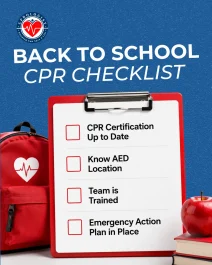
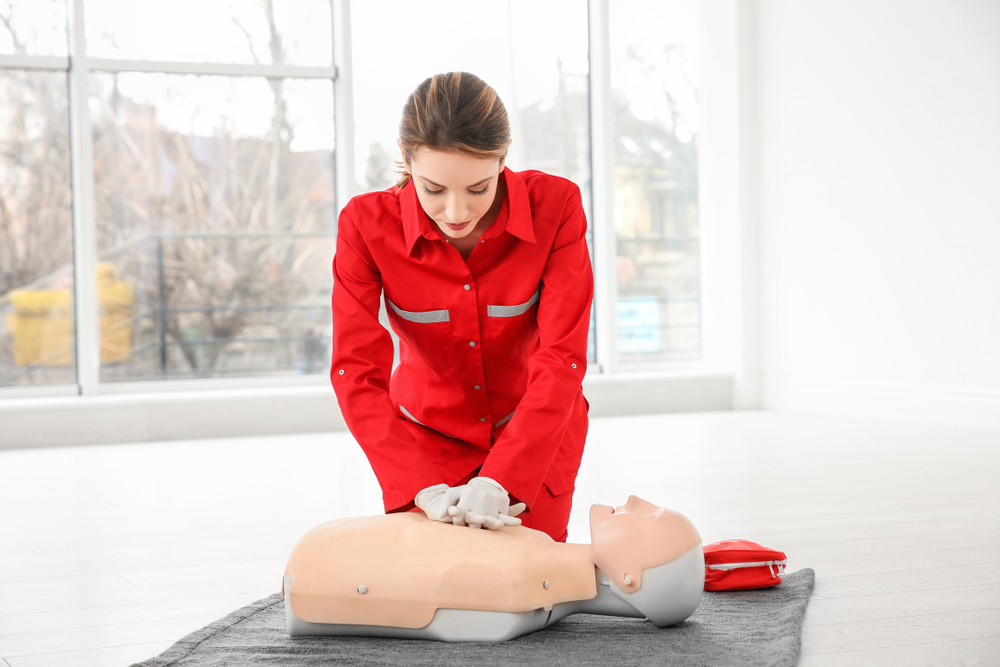
Did you know that over 70% of most cardiac and breathing emergencies occur in the home when a family member is present and available to help? With that estimation, having CPR training is integral for us all.
CPR Survival Stories
Out-of-hospital cardiac arrest is common, mostly happens at home, and survival depends heavily on what bystanders do in the first few minutes. The American Heart Association reports that most arrests occur in private residences and that immediate CPR can double or triple the chance of survival.
These three real stories show exactly how CPR skills turn ordinary people into lifesavers, and why CPR certification in Houston is not just a job requirement; it is family insurance.
- Bystanders Find Older Man
- Marathon Runner Loses Consciousness
- Texas Girl Saves Father
1) Bystanders Find Older Man – “He wasn’t breathing.”
96 minutes of CPR outside a small town grocery store
The story of Howard Snitzer, 54, from Minnesota, is a testament to the value of CPR. When Snitzer was headed to the store, he suffered cardiac arrest and fell to the ground. Nearby first responders ran from a nearby business and immediately started performing CPR. Minutes ticked by, and responders continued with CPR along with electrical shocks from a defibrillator and special medications.
After 96 minutes, Snitzer’s heart finally went back into rhythm, and he was rushed to the hospital. According to doctors, if bystanders hadn’t initiated CPR as soon as they did, Snitzer wouldn’t have survived. Today, Snitzer couldn’t be more thankful for CPR and has dedicated his life to promoting CPR training.
2) Marathon Runner Loses Consciousness – “It was a nightmare.”
A 24-year-old collapses at the half-marathon finish line
Instead of celebrating, Kyle Woods was transported to the hospital soon after crossing the finish line of his first half-marathon. Doctors still 24-year-old Woods passed out and went into full cardiac arrest on the asphalt. A team of six emergency personnel took turns performing chest compressions and sending electric shocks through a defibrillator to his heart. After 12 minutes, Woods’ heart finally started beating.
Today, the marathon runner owes his life to the UCHealth medical team, who were stationed near the finish line. If they hadn’t been trained in CPR and been readily available, the completion of Woods’ first half-marathon would’ve had a different ending.
3) Texas Girl Saves Father – “…his voice sounded really weird.”
A Texas teen uses babysitter CPR training to save her dad
On her way out the door, Aly DeMarco heard her dad, Michael, call out for her in a high-pitched voice. While her first inclination was to ignore him, the inflection in his voice made her turn around. What she found was startling, especially for a 12-year-old girl.
Michael had collapsed from cardiac arrest. Fortunately, Aly had just completed a babysitting CPR class where she was trained to perform chest compressions and rescue breathing exercises. After 10 minutes, emergency paramedics arrived and took Michael to the hospital, where he was in a coma for six days. When he woke up, doctors agreed that the quick response by his daughter was the main factor in his survival. Today, Aly is thankful for her training and her father–without the power of CPR, she wouldn’t have him at all.
Pro Tip: Adolescents between the ages of 11 and 14 should receive specialized CPR training if they will be caring for children without supervision. It will ensure peace of mind for both parents and babysitters in the safety of their children.
What these CPR success stories have in common
Across Minnesota, Colorado, and Texas, the pattern is the same:
- Cardiac arrest happens suddenly, in regular places
- Someone nearby recognizes that something is badly wrong
- Bystanders start high-quality CPR before EMS arrives
- Advanced care builds on the circulation that those compressions preserved
The American Heart Association’s CPR Facts and Stats sheet reinforces what these stories show. About 70 percent of out-of-hospital cardiac arrests happen at home, and CPR performed right away can double or triple a person’s chance of survival.
That is why CPR and BLS training for the public matters as much as the credentials professionals carry.
How Health Street in Houston turns these stories into training
Health Street’s CPR Training School sits in the heart of Houston’s Energy Corridor and focuses entirely on high-quality CPR and life support education for the city and surrounding areas.
For someone just starting out, the first step is often searching for CPR classes in Houston that are hands-on, American Heart Association-based, and taught by instructors with real field experience.
What does Health Street’s course mix cover?
- American Heart Association CPR classes in Houston for both healthcare providers and lay rescuers who want certification recognized by local hospitals and employers.
- Combined CPR and first aid training in Houston which helps families, teachers, and small businesses handle a broader range of emergencies.
- Provider-level BLS certification in Houston for nurses, techs, students, and clinicians who need an AHA BLS card tied to their license or job.
- Higher-tier paths like ACLS certification in Houston and PALS certification in Houston for those who respond to cardiac and respiratory emergencies in hospital units and pediatric settings.
Organizations can bring training directly to their people through group CPR training in Houston, which is ideal for clinics, schools, churches, and businesses that want their teams trained together.
Health Street also maintains dedicated onsite CPR training in Houston options that can be delivered at workplaces with enough space and basic equipment, or at the multi-room training center on South Dairy Ashford.
For individuals who tend to type AHA CPR classes near me into Google the week before a deadline, the public class schedule makes it easy to choose the right course and register online.
Healthcare professionals who juggle shifts, calls, and family can lean on blended learning. Programs under the American Heart BLS online model let you complete the cognitive portion at home, then come in for a short, focused skills check at the Houston training center.
If your current card is close to expiring, the team can walk you through BLS renewal online options that still include hands-on testing with an instructor so employers in Texas recognize the certification.
And for anyone who starts this journey simply by searching for BLS CPR training near me, Health Street aims to be the local, human, and reputable answer in West Houston.